Facility Fit and Free Capacity: The Operational Questions Behind a Transfer Date
Technology transfer discussions gravitate toward science - comparability, analytical methods, process parameters. Meanwhile the questions that most often move a start date are considerably more physical: does this process fit the plant, and is anyone free to run it?
In a recent BioPharm International discussion, Patrick Cushing, VP Operations at Rentschler Biopharma's Milford site, described the operational assessment that runs alongside the technical one.
It starts with the scale you actually need
The entry point is not the molecule. It is the intended scale of production.
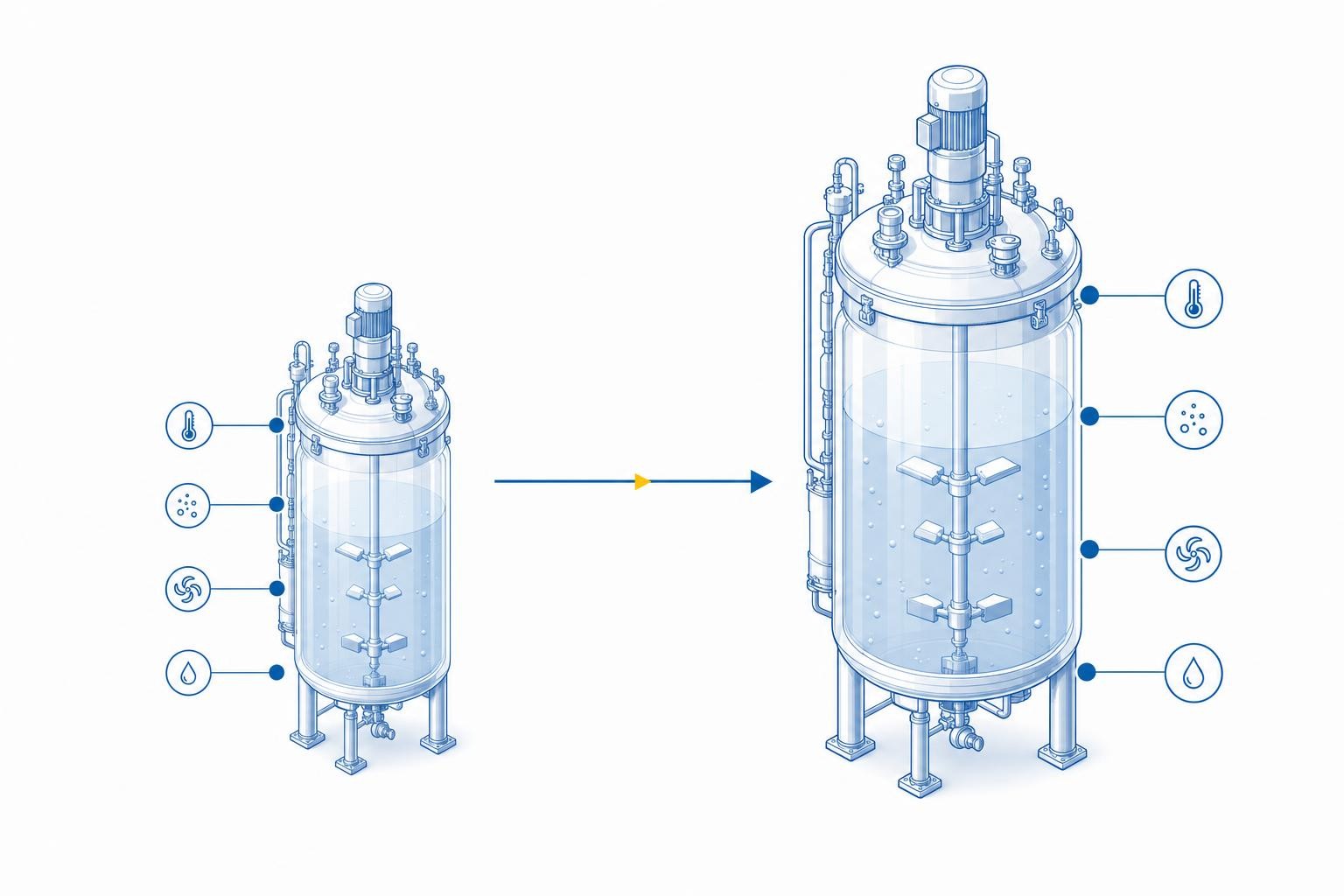
That ordering is deliberate. Scale determines which equipment train is relevant, which suites are candidates, how much raw material must be sourced, and how long a campaign occupies the plant. A process that is straightforward at one scale can be awkward at another in the same building - and a sponsor's real requirement is often a range rather than a number, depending on clinical phase and eventual demand.
From the intended scale, the receiving site works out what the process requires in order to judge how well it would fit the facility.
Facility fit, and naming the gaps
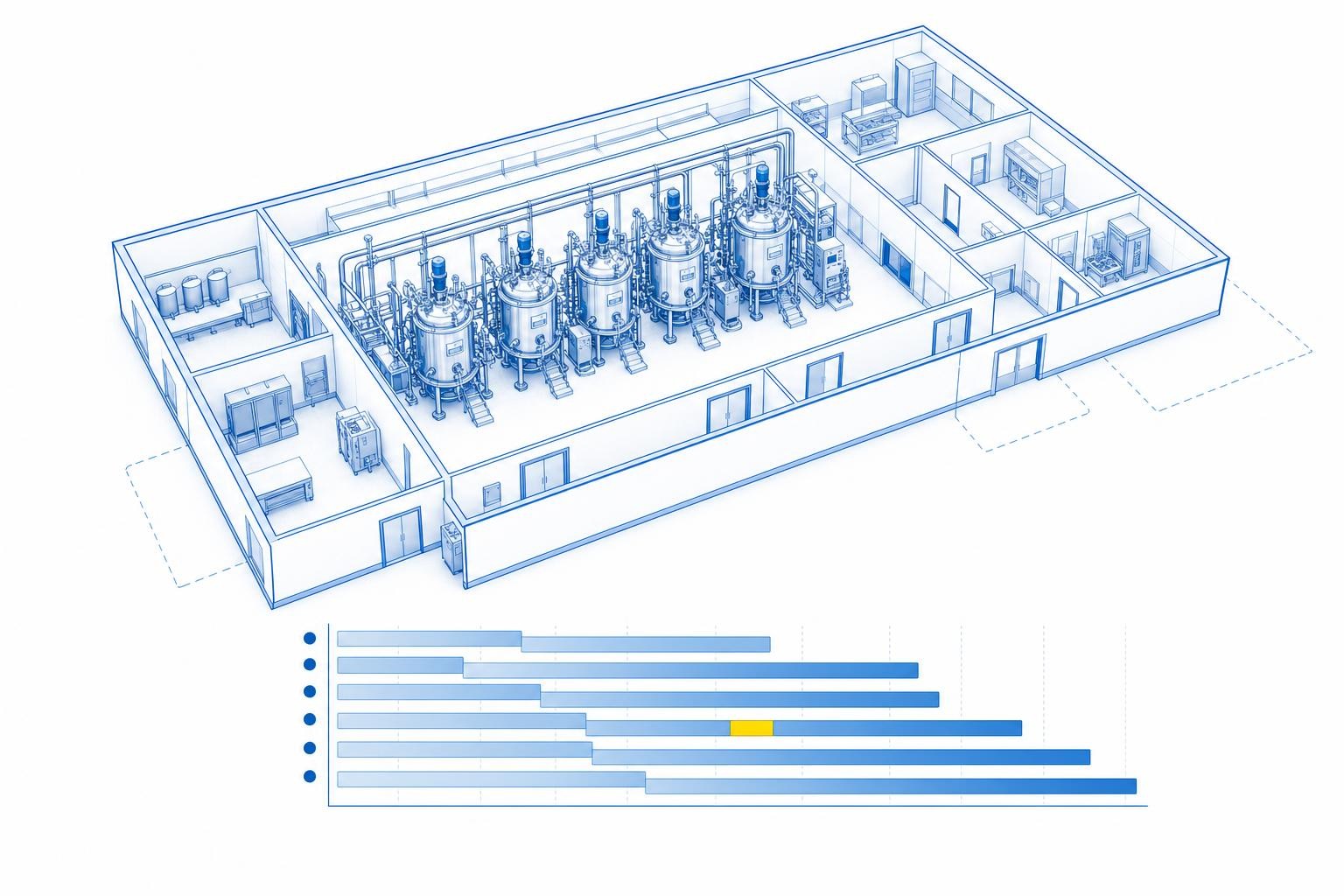
Cushing describes performing a high-level facility fit analysis - a structured comparison of what the process needs against what the site has.
The important part is what happens to the mismatches. His framing is to identify the potential gaps and address them with a solution-oriented mindset.
Two things are worth drawing out.
First, gaps are expected. A facility fit analysis that returns no gaps is either a remarkably fortunate match or an insufficiently careful assessment. The purpose is not to determine whether the process fits perfectly, but to enumerate precisely where it does not.
Second, a gap is not automatically a blocker. Some are resolved with a modest equipment change; some by adjusting a process step; some by a different campaign structure. Others genuinely disqualify a site. The distinction only becomes visible once the gaps are named - which is why doing this analysis early, at a high level, is more valuable than doing it exhaustively but late.
For a sponsor evaluating CDMOs, this is a useful thing to ask about directly. A receiving site that can articulate where your process does not fit, and what it proposes to do about each instance, is demonstrating a more reliable form of competence than one that reports a clean match.
Capacity is not one number
The second half of the assessment concerns time, and this is where the discussion is most specific.
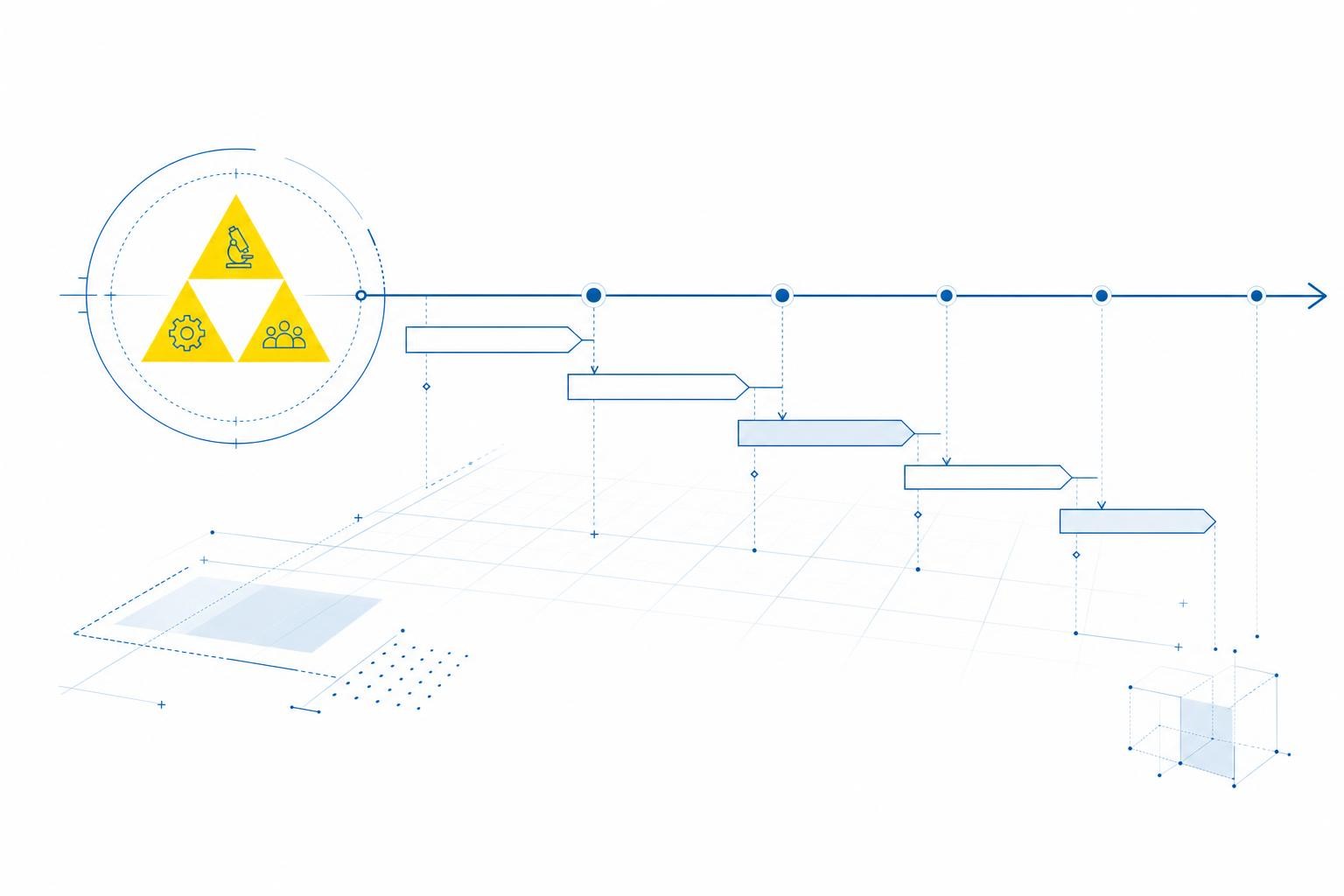
Cushing describes determining the high-level scope and timing - when the project would start, and when the client needs either development or GMP material - and then assessing available capacity across all the teams responsible for the transfer, the production, and the testing of the product, to confirm that capacity and timeline actually match.
That enumeration is the point. Capacity is habitually discussed as though it means bioreactor availability. A transfer consumes considerably more than that:
- Transfer capacity - the MSAT and process engineers who run the gap analysis, adapt the process, and author the documentation
- Production capacity - suites, equipment trains, and the operators and schedulers who run them
- Testing capacity - QC analysts, method qualification, and release testing
A plant slot is worthless if the QC laboratory cannot release the material within the window, or if the MSAT team that must prepare the transfer is committed to two other programmes. Any one of these can be the binding constraint, and the one that binds is rarely the one that gets asked about.
Distinguishing development material from GMP material matters here too. They have different urgency, different documentation requirements, and draw on different parts of the organisation - so a timeline built around one can quietly mislead about the other.
Why this belongs before the commitment
Both halves of this assessment happen before a date is promised, and that sequencing is the substance of it.
A transfer date derived from a technical plan alone is an estimate of how long the work takes. A date derived from a technical plan and a capacity assessment is a commitment about when it can actually happen. The gap between those two is where slipped timelines live.
It also explains why the operational conversation should start early in a CDMO discussion rather than after the technical evaluation concludes. Facility fit and capacity are not confirmatory details - they are constraints that can reshape scale, timing, or site selection. Discovering them late means rebuilding a plan that was already agreed.
None of this is the interesting part of a technology transfer. It is, fairly reliably, the part that determines whether the interesting part happens on schedule.
Based on a BioPharm International discussion with Henning Gerschewski, VP Manufacturing Science and Technology, Rentschler Biopharma SE, and Patrick Cushing, Ph.D., VP Operations, Rentschler Biopharma Inc., hosted by Megan Manzano. Watch the full discussion.
Assessing facility fit for your process? Talk to our Business Development team.