Perfusion-Mode Manufacturing for Complex Molecules: Continuous Bioprocessing Done Right
Perfusion-Mode Manufacturing for Complex Molecules: Continuous Bioprocessing Done Right
Fed-batch manufacturing is the default in biologics for good reasons. It is well understood, operationally straightforward, and supported by decades of regulatory precedent. For a well-behaved monoclonal antibody it is usually the right answer.
Some molecules are not well-behaved. Heterogeneous products, molecules that degrade in the culture environment, and products whose quality profile drifts as a batch progresses all present a problem fed-batch is structurally poorly suited to solve: the product sits in the bioreactor accumulating exposure to conditions that are actively changing around it.
For these molecules, perfusion-mode manufacturing is not a fashionable alternative. It is often the only way to get a consistent product.
What perfusion actually changes
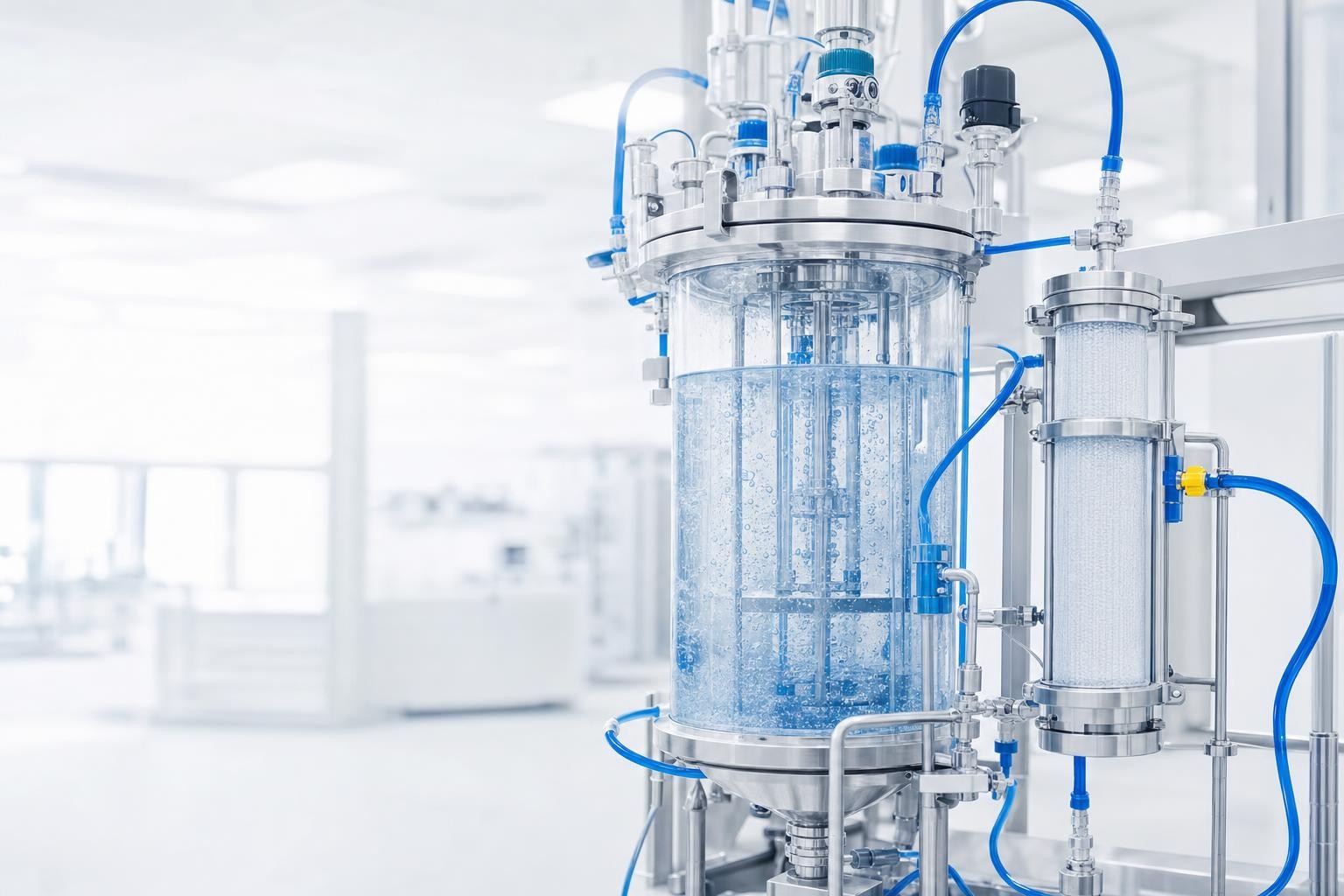
In perfusion, fresh medium is continuously supplied to the culture while spent medium containing product is continuously removed, with cells retained in the bioreactor. Two consequences follow, and both matter for difficult molecules.
Residence time collapses. Product is harvested continuously rather than accumulating over a long batch. A labile molecule spends hours rather than days exposed to proteases, shear and the metabolic by-products of a maturing culture - so it arrives at purification less degraded.
The culture environment becomes stable. Continuous medium exchange holds nutrient and metabolite concentrations near steady state, instead of the moving target of a fed-batch culture. Because glycosylation and other quality attributes respond to that environment, holding it steady tends to narrow product heterogeneity.
For a heterogeneous molecule, that second point is often the whole argument. Consistency of the environment translates directly into consistency of the product.
Where the difficulty moves to
Perfusion does not remove complexity; it relocates it.
Cell retention. The retention device is the heart of the system and its most common failure point. Fouling changes retention performance over a long run, and a device that performs well for two weeks may not for six.
Steady state must be defined and defended. A perfusion process runs for weeks. Defining what "in control" means over that duration - and demonstrating that the process stays there - is a more demanding characterization exercise than qualifying a two-week fed-batch.
Downstream must match the rhythm. Continuous upstream production feeding a batch-mode purification train creates a hold problem. Aligning the two, whether through continuous or carefully scheduled batch capture, is essential for the labile molecules that motivated perfusion in the first place.
Contamination risk scales with duration. A six-week campaign is six weeks of exposure. Sterility assurance and single-use containment design carry more weight than in a short batch.
Resin lifetime: the study that gets skipped
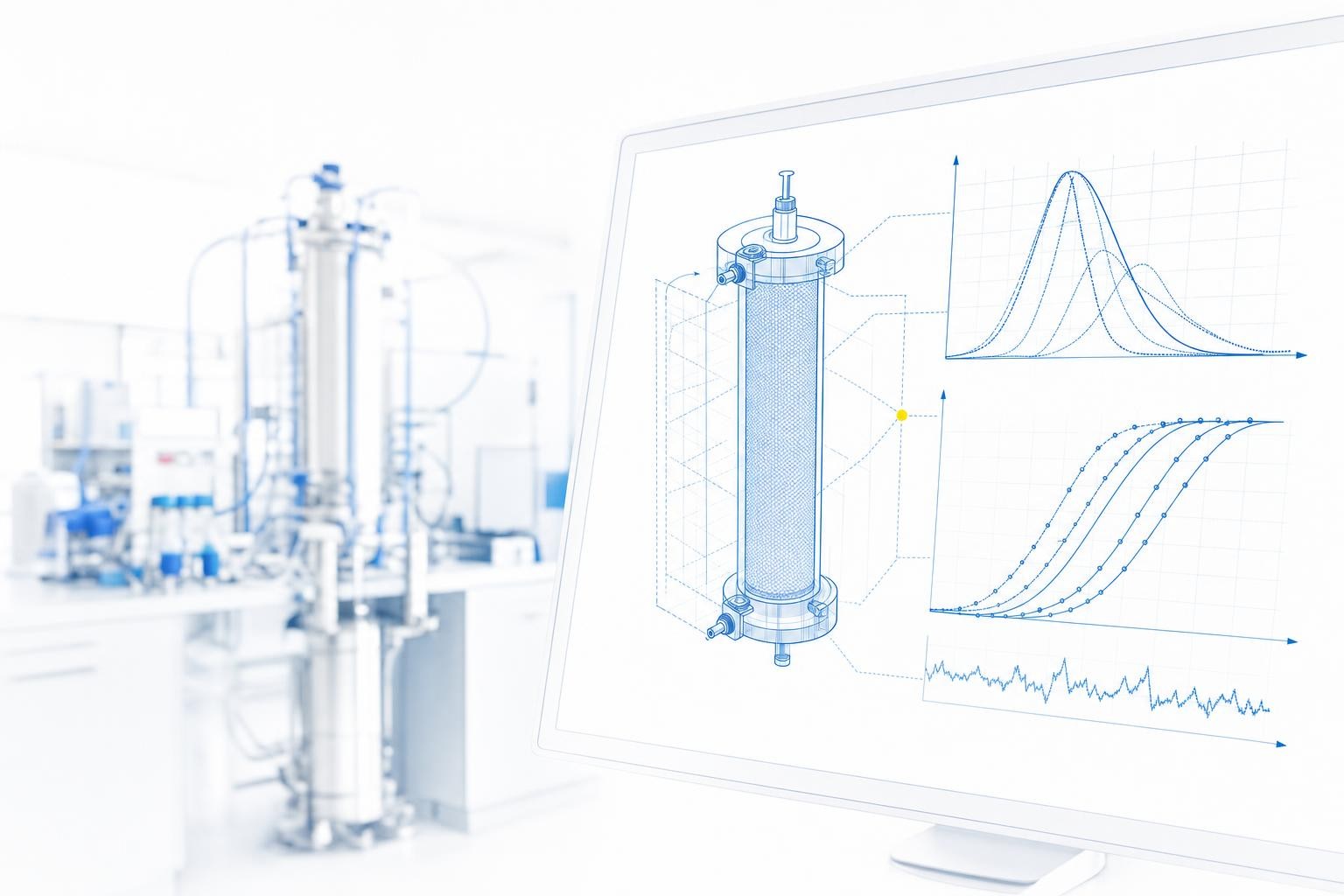
Longer campaigns process far more material through the same chromatography resin, which makes resin lifetime studies disproportionately important - and they remain one of the more commonly under-scoped activities in continuous processing programs.
The relevant questions are practical: how does binding capacity change after many cycles? Does the impurity clearance profile shift as the resin ages? Do cleaning and sanitization regimes remain effective, and do they themselves degrade performance?
Answering these properly requires running the cycles, not extrapolating from a handful. It is unglamorous work with a clear payoff: a defensible resin reuse claim, and no surprises in commercial manufacturing when a column quietly stops performing as characterized.
Analytics as the enabler
A continuous process cannot be understood with end-of-batch testing alone. Perfusion demands analytics that can track product quality through a campaign - so that a drift in glycosylation or a rise in aggregation is detected while the run is in progress and can still be acted upon.
This shifts analytical development from a supporting function to a gating one. In practice, the analytical package frequently determines whether a perfusion process is controllable at all.
When perfusion is the right call
Perfusion is worth the added complexity when at least one of the following is true:
- The molecule is unstable in the culture environment and degrades measurably over a fed-batch duration.
- The product is heterogeneous and quality attributes drift with culture age.
- Volumetric productivity requirements exceed what fed-batch can deliver in the available footprint.
- Consistent, continuous supply is preferable to campaign-based production.
If none of these apply, fed-batch remains the sensible default - and a partner who recommends perfusion regardless of the molecule is selling a capability rather than solving a problem.
The transfer question
Complex molecules frequently arrive at a new partner because they proved difficult elsewhere. Transferring such a process - particularly one requiring perfusion - needs comparability strategy, analytical method transfer and equipment fit assessment handled together, by people who have run these systems before.
The molecules that most need perfusion are precisely the ones least tolerant of a rough transfer. That is an argument for depth of experience over breadth of equipment list.
Rentschler Biopharma supports perfusion-mode and continuous bioprocessing for complex and heterogeneous molecules. To discuss a challenging transfer, contact our Business Development team.